
.png)
policymakers understand citizens’ needs and design solutions that are practical and inclusive
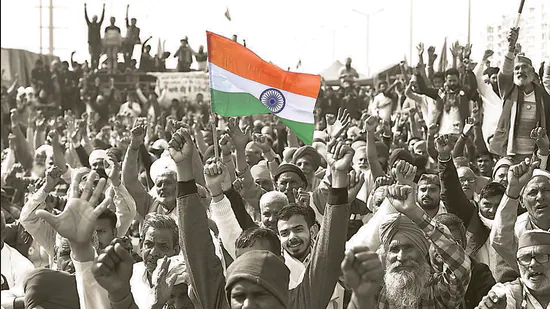
Navigating the cultural richness and vast regional disparities of India poses a significant challenge. Balancing the diverse needs of its 1.4 billion citizens requires innovation at every turn.
For instance, strategies that work in the urban landscapes of Mumbai may falter in the rural heartlands of Bihar.
In a federal setup, each state has its own authority, but it needs to work closely with the central government. This can make putting policies into action more complicated, as they have to work together smoothly.
Designing for a population of billions necessitates a design thinking approach to ensure inclusivity and efficiency.
India has made progress in growing its economy, but there still exists a considerable social divide.
To bridge these gaps, we need more than just money – we need policies that focus on things like education, healthcare, and giving everyone a fair chance.
It’s about designing solutions that go beyond just throwing money at the problem, but instead, looking at the whole picture and finding ways to make things better for everyone.
Corruption is a big problem that stops things from getting better and makes people not trust the government. Making things more transparent and holding people accountable is really important.
India’s vibrant multi-party system adds another layer of complexity. Coalition governments, while a testament to democratic plurality, often wrestle with policy consistency. Designing governance frameworks that can sustain diverse viewpoints and foster effective decision-making is vital.
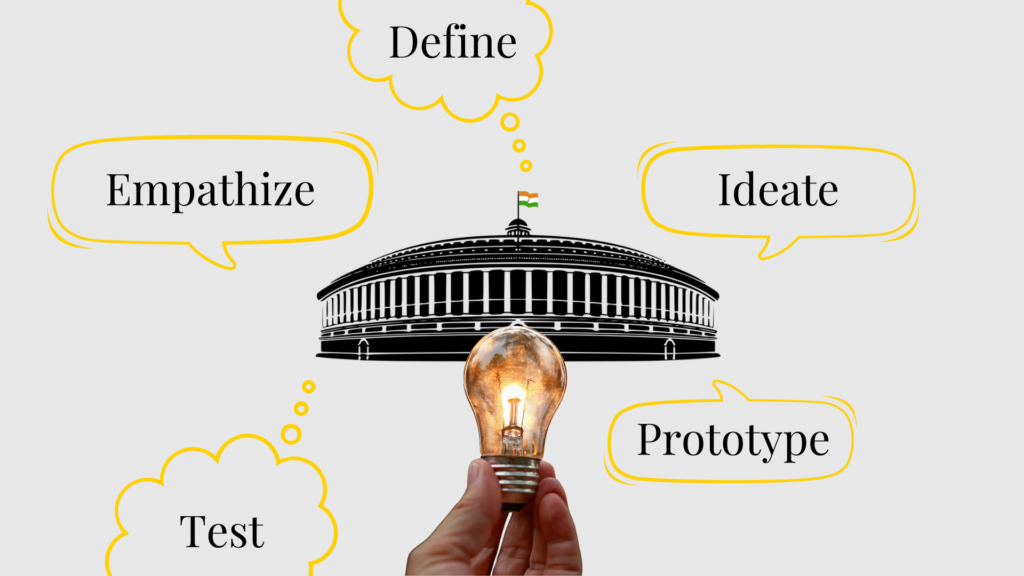
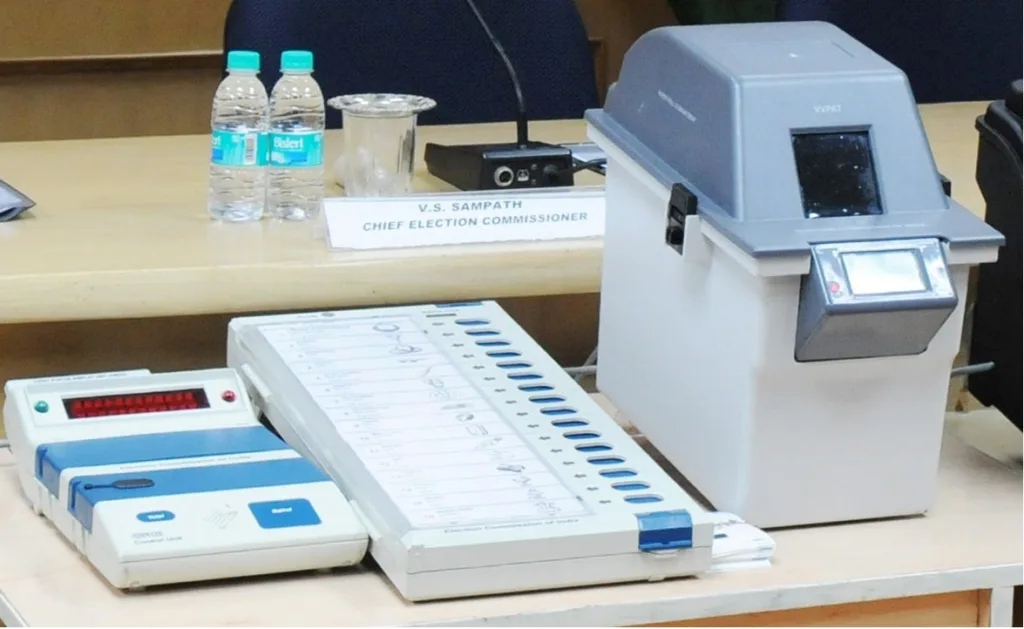
From empathizing with voters to prototyping new technologies like Electronic Voting Machines (EVMs), the ECI exemplifies design thinking in enhancing electoral transparency and efficiency.
India’s 2024 election involves approximately 969 million voters.

These innovations have made the voting process smoother and more accessible, though they are continually tested and refined to adapt to India’s dynamic electoral environment.
The evolution of Aadhaar, from understanding people’s needs to trying out different ideas, showcases how design thinking can be used to develop a single identification system that works for everyone.
This initiative aims to bridge the digital divide, with a sharp focus on inclusivity. By fostering innovations like the Unified Payments Interface (UPI) and advancing digital literacy, Digital India seeks to bring the power of the digital revolution to every corner of the nation.
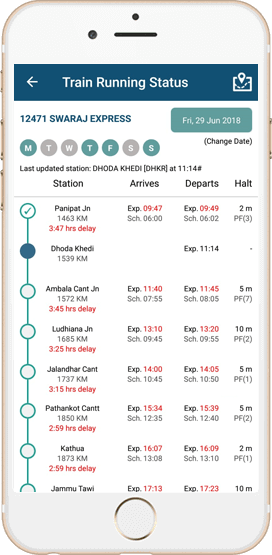
The objective was clear: make every journey smoother and more pleasant. To achieve this, Indian Railways turned to innovative solutions such as upgrading station facilities, implementing real-time updates to keep passengers informed, and enhancing overall cleanliness.
When India faced the challenge of vaccinating its vast population during the COVID-19 pandemic, it required innovative solutions across various stages, from drug discovery to vaccine facilitation.
Here’s how healthcare professionals & organizations adopted a design thinking approach:

While over 55% of Indians have access to broadband, only 20% have the ability to use the internet effectively. In a world increasingly dominated by technology, a significant gap in digital literacy persists, leaving a large portion of the population sidelined from the growing digital economy.
Recognizing the need to bring everyone on board, various stakeholders, including governments and NGOs, need to initiate comprehensive digital literacy programs.
These programs will need to target all age groups but are particularly focused on underserved communities where access to technology is limited.
To complement these educational efforts, tech companies are stepping in to design more user-friendly technologies.
By developing devices and applications with simplified interfaces and voice-guided assistance, technology becomes accessible to individuals with varying levels of digital expertise.
Moreover, public-private partnerships are flourishing, leading to the creation of community technology centers. These centers not only provide the necessary infrastructure in both rural and urban areas lacking it but also become hubs where individuals can learn and practice new digital skills, thereby fostering a digitally inclusive society.
Empowering Local Governance: By implementing frameworks that enhance the powers of local bodies, there is an opportunity to foster governance that is more responsive to the specific needs and circumstances of local communities.
Design Thinking Workshops: Local governments could host design thinking workshops to involve citizens in the problem-solving process. This approach not only engages the community but also ensures that solutions are well-suited to local needs.
Technology Integration: Leveraging technology to improve communication and streamline processes between different levels of government presents an opportunity to enhance the efficiency and responsiveness of governance.
Imagine a farmer in the most remote part of India being able to utilize predictive analytics, crop monitoring & various other technologies. At NetBramha Studios, we designed, from scratch, a unique & innovative farming solutions platform that empowers Indian farmers to become more tech-savvy & leverage the power of agritech design, for Seedworks, a pioneering plant-science based company.
Comprehensive Research: There is a need for thorough qualitative research to better understand the causes and effects of social disparities. These could include inequalities in income, education, health, employment, or access to services. This research can inform more effective and targeted policy development.
Stakeholder Engagement: Involving a broad spectrum of stakeholders, especially marginalized groups, in the policy-making process is crucial. This engagement helps ensure that policies are inclusive and reflective of diverse community needs.
Monitoring and Evaluation: Establishing robust systems to monitor and evaluate the impact of policies provides an opportunity to adapt and refine strategies, ensuring they remain effective and relevant.
Blockchain Technology: Implementing blockchain technology in voting systems offers an opportunity to enhance transparency and security, building trust in the electoral process. This could involve creating a decentralized ledger for recording votes, ensuring that each vote is cryptographically secured – This means once a vote is recorded on the blockchain, it cannot be altered, helping to prevent fraud and ensuring the integrity of the electoral process.
Voter Education: Educating the electorate about new voting technologies and electoral reforms can help increase voter engagement and turnout.
Accessibility Enhancements: There is a critical opportunity to make voting more accessible through innovations such as mobile voting solutions or improved polling station accessibility, ensuring that all citizens can participate in the electoral process easily and effectively.
Feedback and Grievance Redressal Platforms: Develop digital platforms that are easily accessible and user-friendly, where citizens can submit feedback, complaints, or suggestions directly to relevant authorities. This could involve mobile apps or websites with simple, intuitive interfaces.
User Experience Focus: Apply design thinking principles to ensure these platforms are designed with the end-user in mind. This involves testing with real users, iterating based on feedback, and simplifying the process to minimize barriers to engagement.
Community Helpdesks: Establish local helpdesks that assist citizens in navigating services and voicing concerns, ensuring those without digital access can also participate.
Visualization Tools: Utilize data visualization tools to make policy impacts understandable to the general public. Infographics, interactive maps, and dashboards can illustrate how decisions affect different community segments.
Inclusive Workshops and Forums: Organize regular workshops and public forums where policymakers use design thinking exercises to involve citizens in the ideation process. This helps in gathering diverse opinions and fostering a collaborative environment.
Real-Time Feedback Mechanisms: Implement systems where feedback on policy can be given in real-time, allowing for a more dynamic interaction between citizens and government.
Iterative Policy Design: Adopt a mindset of continuous improvement, where policies are treated as products that need regular updates based on new data and insights. This approach involves piloting small-scale versions of policies, gathering data on their impact, and refining them iteratively.
Data-Driven Decision Making: Leverage big data analytics to gain insights into how policies are performing in real-time. Use this data to make informed decisions that are more aligned with current needs and circumstances.
Cross-Sector Collaboration: Encourage collaboration across different sectors and disciplines to bring in fresh perspectives and expertise, which can lead to more innovative and effective governance solutions.

India’s democratic journey is as challenging as it is inspiring. Leveraging design thinking not only provides innovative solutions but also ensures these solutions are humane, user-focused, and dynamic. As we look to the future, the blueprint for a more inclusive, effective democracy seems not just necessary, but achievable. As India continues its democratic journey, design thinking can be the catalyst for a brighter, more participatory future.
Design Thinking gives a step-by-step way to deal with big tasks like making policies or starting development projects. This is really helpful in places like India, where there are lots of different cultures and some areas are more developed than others. With Design Thinking, you can break things down into smaller steps and keep checking how things are going. This helps the government work better and understand what people need.
Even though people talk a lot about having a government that cares and using good ideas to help society, actually doing it can be tricky. But by using Design Thinking in making policies, we can make sure the government really listens to people’s needs and works well for everyone. This means not just fixing problems when they pop up, but also getting lots of different people involved in coming up with solutions that really make a difference.







.png)
.png)



