
.png)
user experiences, boosts findability, supports content management, aids in SEO, and allows for scalability, all of which are crucial for the success of digital products and businesses in today’s information-driven landscape.
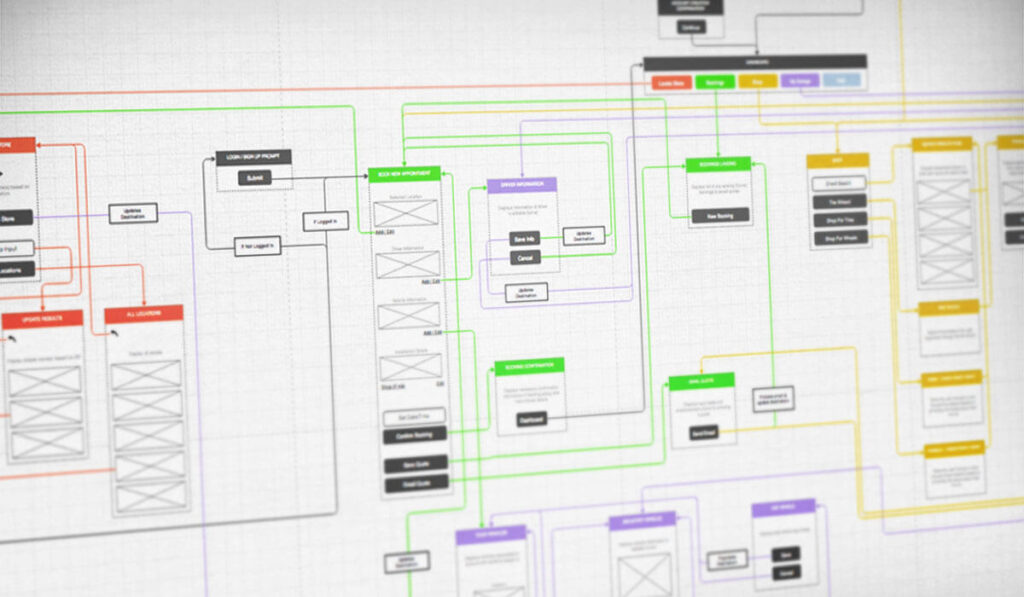
Information architecture (IA) is about organizing and naming content effectively to enhance user experience. It ensures users can easily find information and perform tasks by creating a coherent structure within a system. In UX, IA improves usability by supporting intuitive navigation, clear messaging, and efficient workflows. It involves creating site maps, wireframes, and tools for information management. The goal is a seamless, user-friendly experience that aligns with the target audience’s needs and preferences.
Information architecture is essential because it provides the structural framework for organizing and presenting content within a product, ensuring that users can easily access and navigate the information they seek. An effective IA enhances user experiences, boosts findability, supports content management, aids in SEO, and allows for scalability, all of which are crucial for the success of digital products and businesses in today’s information-driven landscape.

Your IA serves to guide users in understanding their location, the content they’ve discovered, what’s available, and what to anticipate. It influences word choices, user interface design, and interaction design, playing a role in wireframing and prototyping. Here are some important business goals IA helps you achieve:
A well-structured IA ensures that users can easily find the information or products they seek. It also ensures a consistent and cohesive user experience across different parts of a digital product. This results in improved user satisfaction and can lead to increased customer loyalty. Information architecture (IA) shapes user experience (UX) by:
IA facilitates the efficient organization and management of digital content. It simplifies the process of adding, updating, and removing content from websites or apps.
When content is logically structured and labeled, it’s more accessible to search engines. This can boost a website’s search engine ranking, leading to increased organic traffic.
Businesses can save money by avoiding the need for extensive restructuring or redesign later on. A strong IA framework prevents costly rework. When developers have a clear IA to follow, it streamlines the development process. This results in shorter project timelines and lower costs.
Businesses can easily scale their digital products and content when an effective IA is in place. It supports growth and expansion without a significant increase in complexity.
IA can underpin personalization efforts, helping businesses provide tailored content or product recommendations based on user behavior and preferences.
IA makes it easier for customers to find the information they need, complete tasks efficiently, and have a positive overall experience. This can lead to increased customer satisfaction and loyalty, which can lead to repeat business and referrals.
By carefully considering each of the components of IA and how they can be used to improve the user experience, increase sales and conversions, improve SEO, reduce support costs, and improve team collaboration, you can create an IA that will give you the edge you need to succeed in today’s competitive marketplace. A well-structured IA helps users find what they need quickly, enhancing satisfaction and loyalty, which can give your business an edge in the market.
Information architecture (IA) is crucial for digital spaces like websites and databases. It ensures easy information access and user-friendly structures. If your platform faces usability issues, consulting an Information Architect is vital. IA can significantly improve digital user experiences, helping websites provide easy access to information and meet business requirements. Many web design problems occur due to a lack of proper IA structure.

How is the information structured and categorized? This includes:
How is the information labeled and named? This includes things like:
How do users move around the information? This includes:
A site map visually outlines a website’s structure, showing its pages and connections. Information architecture (IA) is the broader strategy for organizing content and enhancing user experiences. Site maps are a part of IA, representing the site’s hierarchy, but IA encompasses the overall content organization and accessibility approach, prioritizing user needs.
How do users find specific information? This includes things like simple search bars, advanced search filters, and faceted search. The designer need to keep in mind about the following:
The user has a perception of the usefulness of a piece of information relative to their goal. They decide where to go next by following the information scent that leads them to the information they need or the task they want to complete. This is known as information scent.
For example, a user is more likely to click on “Product Details” than “Learn More” on an e-commerce site.
Information scent is an important concept for information architects to consider, as it can have a significant impact on the user experience.

An IA strategy is a plan for managing the IA of a website or product. It should include the following:
The responsibility for IA within your organization can vary depending on the size and structure of your organization. In some organizations, IA is a dedicated role. In others, IA is the responsibility of a team of people, such as web designers, UX designers and content strategists.
Best practices for effective IA:

Design-driven innovation is crucial for successful information architecture because it ensures that the IA is user-centered, intuitive, and aligns with user needs, enhancing overall usability and user satisfaction.
User experience design plays a pivotal role in information architecture by focusing on creating intuitive, visually appealing structures that make it easy for users to access and interact with information, contributing to better user engagement and satisfaction.
Engaging a design studio for your information architecture can be helpful as:
To measure ROI for IA, monitor factors such as:
An efficient IA should lead to higher user retention, improved search rankings, and cost savings in content management and development. By quantifying these improvements, you can calculate IA’s ROI.
IA decisions can have a significant impact on the long-term success of a website or product. A well-designed IA can help to improve the user experience, increase sales and conversions, and improve SEO. However, poorly designed IA can lead to a number of problems, such as user frustration, lost sales, and poor SEO performance.
When making IA decisions, it is important to consider the long-term implications. For example, if you are planning to launch new products or services in the future, you need to make sure that your IA is flexible enough to accommodate those additions
One thing becomes crystal clear to us is that IA is more than just an organizational framework. It’s the compass that guides users through the labyrinth of information, ensuring that they reach their destination effortlessly. The power of IA transcends mere organization; it enhances user engagement, boosts satisfaction, and drives business objectives.







.png)
.png)



