
.png)
many organizations now consider mapping and geospatial analytics central to their business strategy.
If your business builds geospatial tools, mapping dashboards, or spatial analytics products, this article will help you take your UX design from “usable” to exceptional.
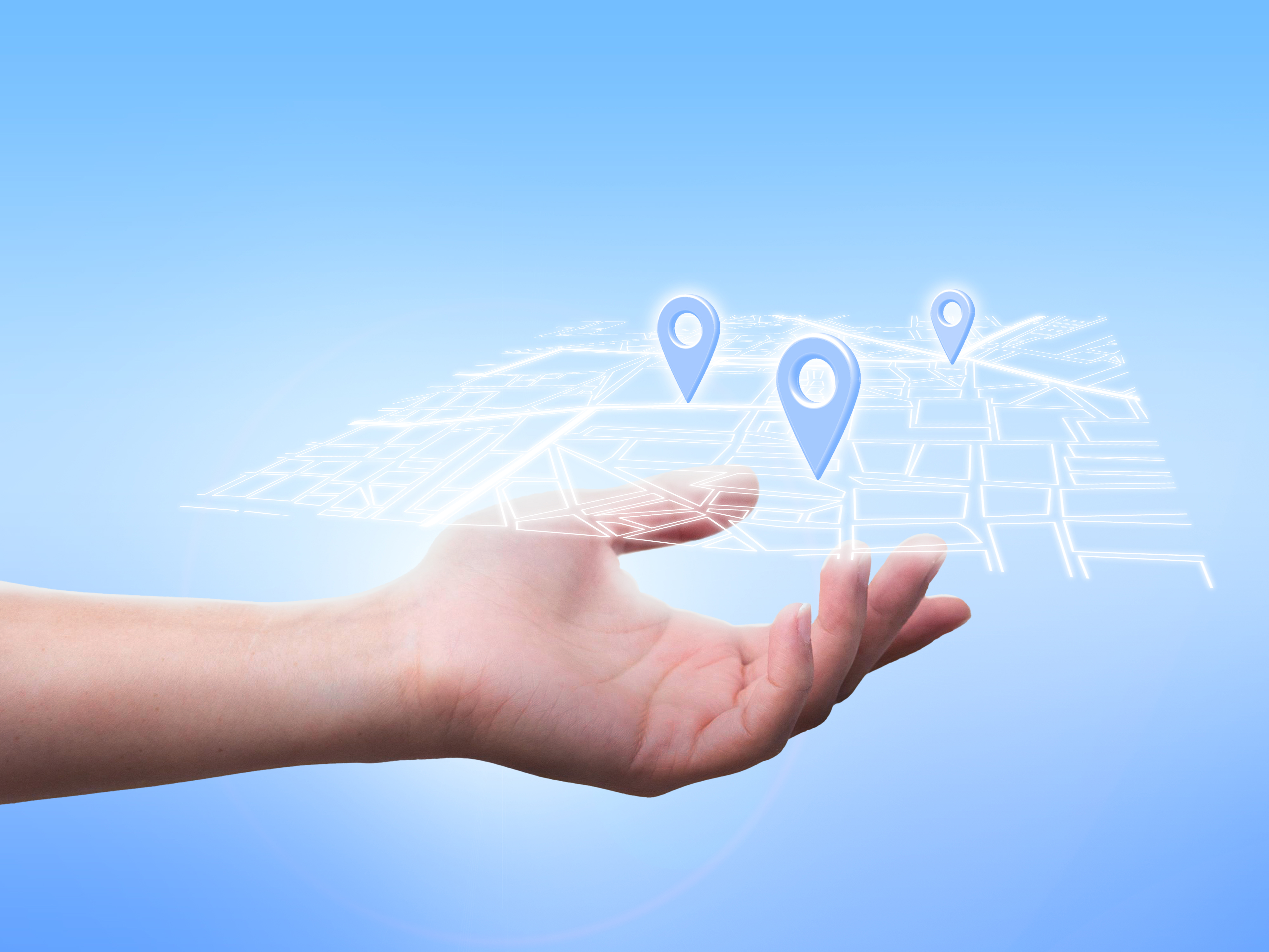
Location-based intelligence (also termed location intelligence or spatial intelligence) is about combining geospatial and contextual data (like demographics, mobility, event data, IoT sensors) to derive actionable insights. Examples include:
Heat maps of foot traffic
According to industry research, many organizations now consider mapping and geospatial analytics central to their business strategy. (For example, see this BCG survey on leveraging location intelligence across industries.)
But raw data and algorithms alone are not enough. Without intuitive, thoughtful UI/UX, your end users – analysts, operators, business users – may struggle to extract value. That’s why design is not just “cosmetic” in LBI – it’s a strategic asset.
Building UI/UX for spatial tools is uniquely challenging. You must accommodate layered data, interactions (zoom, pan, layer toggle), real-time updates, filtering, drilldowns, and context awareness.
Here are reasons design is central:
Organizations specializing in spatial UX, such as certain GIS design consultancies, emphasize that map and geospatial tools require bespoke UX thinking – not just repurposed dashboards.
Engagement is the foundation of retention and lead generation. Good UX fosters exploration and confidence. Design patterns that help:
Progressive disclosure – show only core controls initially, reveal advanced ones on demand
Smooth transitions and feedback – highlight hovered regions, loading cues
Personalization and saved views – let users default to their region or view
Onboarding guides, tooltips, contextual help
Encourage discovery – prompt users to try different layers, compare maps, explore time trends
When users feel comfortable interacting with maps and spatial insights, they’ll stay longer, explore more, and derive more value.
Spatial intelligence often means juggling overlapping data — points, regions, flows, densities. The design’s role is to surface clarity:
These design practices turn complexity into insight, helping users spot anomalies, trends, or relationships quickly.
Efficiency is directly tied to UX. Better-designed workflows reduce friction and accelerate user tasks:
When users can perform spatial analyses in fewer clicks, the tool becomes a productivity multiplier, not a burden.
A strong UX is more than functional – it’s delightful, confidence-building, and frictionless:
Location-based intelligence is powerful, but only when people can actually use it. No matter how advanced your data pipelines or analytics engines are, the ultimate success of your product depends on how intuitively insights are delivered.
Good UI/UX design transforms raw geospatial data into clear, contextual stories. It helps users navigate layers of information, make decisions faster, and build trust in what they see. From visualization choices and performance optimization to role-based personalization and onboarding, every design decision shapes how users perceive intelligence itself.
As industries increasingly rely on spatial insights to guide strategy, design becomes the differentiator – the bridge between complex data and confident action. In the evolving world of location-based intelligence, it’s not just about mapping the world; it’s about making sense of it through human-centered design.







.png)
.png)



