.avif)
TVS required a digital experience to complement its connected electric vehicle ecosystem — enabling riders to track trips, navigate routes, receive alerts, and view riding insights.
The product needed to support real-time riding information while remaining simple and distraction-free.
Our mission was to design a rider-focused digital interface that brings navigation, trip data, alerts, and bike insights together into a unified mobile experience.
through navigation, alerts, and ride data in one connected flow
through clear presentation of current trips, past rides, and riding metrics
through dedicated alert views surfacing critical bike information at the right moments
through a cohesive visual language across vehicle UI, mobile app, and supporting flows
Turn-by-turn routing visualized through a bold, map-led riding screen.
Speed, range, battery, and ETA presented through high-contrast visual components.
Clear distinction between active and resolved alerts with prominent status indicators.
Turn-by-turn routing visualized through a bold, map-led riding screen.
Turn-by-turn routing visualized through a bold, map-led riding screen.
Speed, range, battery, and ETA presented through high-contrast visual components.
Speed, range, battery, and ETA presented through high-contrast visual components.
Clear distinction between active and resolved alerts with prominent status indicators.
Clear distinction between active and resolved alerts with prominent status indicators.
For TVS, we created a connected riding experience that keeps information clear and accessible on the move.
through consistent navigation patterns
through focused real-time data
through unified ride access
.avif)
The experience flow maps how users move between home, navigation, alerts, calls, and messages. This structure defines the overall interaction logic before UI refinement.
.avif)
Low-fidelity wireframes establish the core journeys — starting trips, viewing alerts, checking ride history, and accessing bike data. These explorations define layout priorities and screen relationships early in the design process.
.avif)
.avif)
The finished mobile experience presents trips, bike feed, and alerts through card-based layouts. Dedicated screens for current rides, range, CO₂ savings, and low-battery alerts help riders stay informed through clean visual grouping and clear status cues.
.avif)
.avif)


NetBramha designed the cluster and mobile app for the TVS Creon electric bike - a smart, zero-disconnect biking navigation system for Android and iOS that keeps a rider's smartphone connected to their bike without interrupting the ride with calls or notifications.
TVS Motor is India's third-largest two-wheeler manufacturer, selling 3 million+ units annually. Creon is the company's dedicated push into electric vehicles, and NetBramha designed both the physical vehicle dashboard interface and its connected mobile companion.
Notifications and calls reaching a rider mid-journey create genuine safety risk, not just annoyance - the entire cluster app was designed around eliminating that distraction while still delivering essential information like navigation and range.
Designing safety-critical restraint into an interface, deliberately choosing what NOT to show, is a different design discipline from most of NetBramha's work; the closest parallel is the trust-building restraint applied to Dr Trust's health data presentation, where clarity mattered more than density.
The app provides real-time traffic snapshots, navigation assistance, and tracks the rider's carbon footprint reduction from choosing an electric vehicle - combining safety-critical and sustainability-motivated information in one connected experience.
Handling live, continuously updating data without overwhelming the user connects this project technically to NetBramha's other real-time work, particularly the Google cricket experience, where motion data also had to render on-screen without perceptible lag.
A vehicle cluster display is viewed in glances of a second or two while riding, under vibration and variable lighting, which rules out dense text or small interactive targets that would be perfectly fine on a phone screen.
That glanceable-under-motion constraint has no real equivalent elsewhere in NetBramha's portfolio; it's a genuinely distinct discipline from designing for a phone or desktop screen, where the user can typically look and read at their own pace.
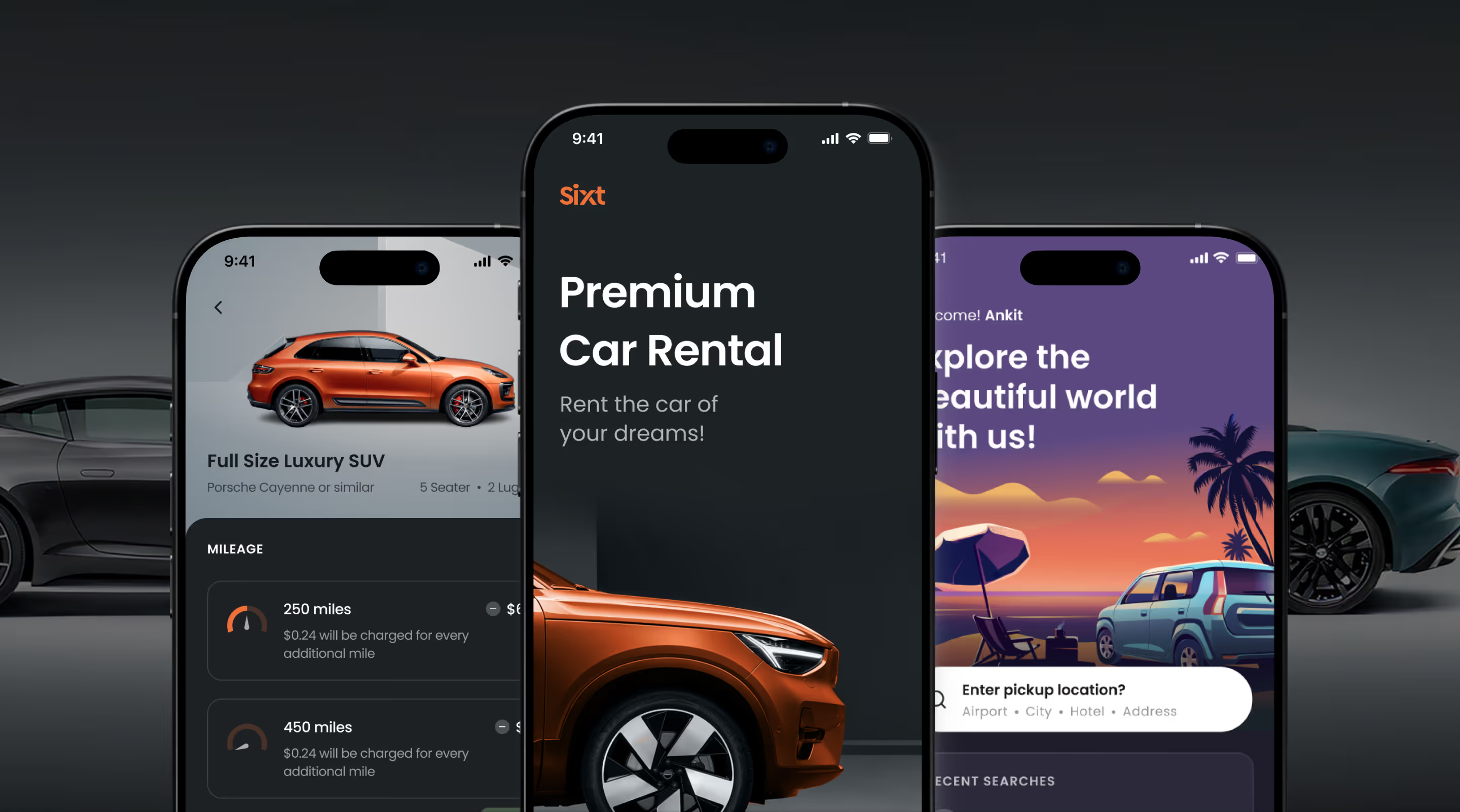
TVS Creon is NetBramha's primary electric-vehicle credential. Within broader mobility, it sits alongside SIXT (car rental) as NetBramha's two transport-sector projects, though SIXT is a booking-and-fleet UX problem while TVS is embedded, in-vehicle hardware UX.
The two projects don't share a design pattern despite both being "mobility" - SIXT is a web/app booking flow, TVS is a physical hardware interface, which says more about NetBramha's range across the sector than about mobility UX as a single discipline.
Recommended Next